
24 OCTOBER 2026
What Happens After the Apprenticeship? Building Evidence on Youth Employment in Ethiopia
Published By
BAN-DRCE
Youth Employment & Social Protection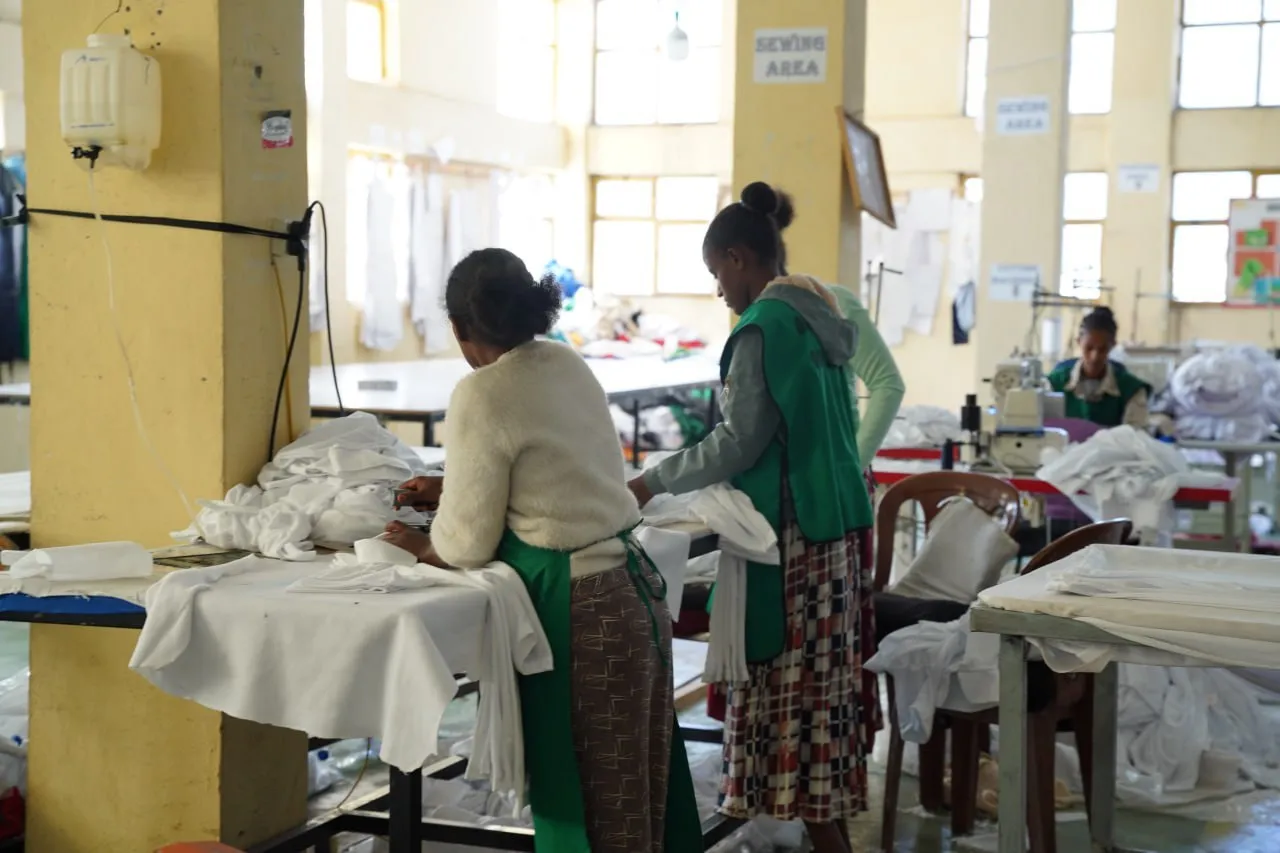
An apprenticeship can give a young person something that is often difficult to obtain when entering the labor market: the opportunity to gain practical experience, demonstrate their abilities and learn what employers expect. But completing a placement and securing employment are not the same thing. Understanding the difference is essential to determining whether youth employment programmes are achieving their intended purpose. This question is particularly relevant in Ethiopia, where a growing youth population and continued urbanization place pressure on the labor market. For young people with limited work experience or educational opportunities, the challenge is not simply finding a vacancy. It is accessing opportunities that help them build skills, gain experience and improve their employment prospects over time.
This question is particularly relevant in Ethiopia, where a growing youth population and continued urbanization place pressure on the labor market. For young people with limited work experience or educational opportunities, the challenge is not simply finding a vacancy. It is accessing opportunities that help them build skills, gain experience and improve their employment prospects over time.
The Urban Productive Safety Net and Jobs Project (UPSNJP), implemented by the Government of Ethiopia in collaboration with the World Bank, addresses part of this challenge through its Youth Apprenticeship Program. Led by the Ministry of Labor and Skills, the programme connects disadvantaged and inexperienced young jobseekers with private firms. It combines workplace placements with life skills, digital skills and job-search training, alongside mentoring and support during the apprenticeship.
Beyond the Placement
The programme recognizes that entering employment requires more than technical knowledge alone. Young people need opportunities to apply what they know, while employers need ways to assess their capabilities. Whether this combination of support translates into better employment outcomes, however, cannot be established through enrolment and completion figures alone. It requires evidence of what happens to participants over time.
Reconnecting with participants across Addis Ababa
BAN-DRCE contributed to this process through endline data collection supporting the programme's impact evaluation, covering 5,200 young jobseekers and 1,500 firms across Addis Ababa's 11 sub-cities. The assignment formed part of a broader evaluation involving the Ministry of Labor and Skills, the Project Coordination Unit and the World Bank's research team.
A central challenge was to build on information gathered during earlier survey rounds. To examine how outcomes change over time, the evaluation team needed to reconnect with young people and firms and collect information that could be compared with baseline and midline data. This requires more than completing interviews. People change telephone numbers, move homes, change jobs or become difficult to reach; firms may also change their contact details or staffing arrangements. Careful respondent tracking, repeated contact attempts and clear documentation help limit gaps in the data and support more reliable analysis.
The survey also needed to capture more than whether a young person was employed. Information on education, work experience, job-search activity, income and expenditure, skills and programme participation would help the research team understand participants' circumstances more fully. Interviews with firms examined their experiences with the programme, recruitment and staffing practices, and firm performance. Considering both perspectives is important because employment outcomes depend not only on young people's capabilities, but also on employers' needs and decisions.
““An apprenticeship may open the door to employment, but understanding whether it leads to lasting progress requires following outcomes, examining the evidence and learning from what the findings reveal.””
Grounding Evaluation in Reliable Fieldwork
Producing data that could support this analysis required careful fieldwork and quality assurance. BAN-DRCE's work included electronic questionnaire preparation and testing, translation, enumerator training, field piloting, supervision and checks of completed interviews. Computer-Assisted Personal Interviewing (CAPI) supported data collection, while consistency reviews and back-checks helped identify errors and omissions. Respondent privacy, confidentiality and informed consent were also important considerations throughout the process.
These measures matter because weaknesses in data collection can affect what an evaluation is ultimately able to establish. Inconsistent questions can undermine comparisons across survey rounds, while incomplete interviews can leave important outcomes unobserved. Reliable data collection does not guarantee strong findings, but it provides the foundation needed to interpret results and draw conclusions with greater confidence.
It is equally important to distinguish collecting evidence from establishing impact. Endline data alone cannot show that a programme caused an observed change. The findings must be analyzed alongside earlier survey rounds and the evaluation's treatment and control group design. That analysis is what allows researchers to estimate the programme's effects and assess what the results mean for future implementation.
Informing Policy and Practice
For policymakers and programme teams, the value of this evidence lies in the decisions it can inform: whether the intervention is improving young people's employment prospects, where implementation may need adjustment, and how support for participants and participating firms could be strengthened.
These questions must be answered directly through empirical evaluation findings rather than assumed from programme design alone. BAN-DRCE's work on the UPSNJP Youth Apprenticeship Program reflects an essential part of evidence-informed policymaking: ensuring that programme results can be assessed using reliable, high-integrity data.
An apprenticeship may open the initial door to employment, but understanding whether it leads to lasting progress requires more than counting placements. It requires systematically tracking outcomes, examining the evidence and learning from what the findings reveal over time.
Request more information